
Where Did the Diesel Go? How to Account for Every Litre With a Tecalemit Fuel Management System
Author
Stephen Corser
Date Published
Fuel is one of the largest operating expenses for many Australian transport, construction, mining and agricultural businesses. When thousands of litres of diesel are purchased every month, even a relatively small discrepancy can represent a considerable amount of money.
The problem is that many businesses know how much fuel they have purchased, but cannot confidently explain where every litre has gone. Fuel may have been dispensed into a vehicle, used by a piece of machinery, transferred between tanks or lost through an inaccurate record. In some cases, the cause may be unauthorised use, theft or a leak.
Without an effective fuel management system, it can be extremely difficult to distinguish between them.
How Much Unaccounted Diesel Is Costing Your Business?
Imagine that your business purchases 50,000 litres of diesel during a month. Your records only account for 48,500 litres being dispensed into vehicles, machinery and generators. That leaves an unexplained difference of 1,500 litres.
At a diesel price of $2.40 per litre, the discrepancy is worth $3,600. If the same difference occurs each month, the annual cost could reach $43,200.
This does not necessarily mean that someone has stolen the missing fuel. The discrepancy could result from several smaller problems across the storage, dispensing and recording process. The important question is whether your business has enough accurate information to identify the cause.
Where Can Unaccounted Fuel Go?
There is rarely one universal explanation for missing diesel. Fuel discrepancies can arise at several points between delivery and consumption.
Potential causes include:
- Fuel being dispensed without authorisation
- Drivers refuelling the wrong vehicle
- Transactions not being recorded
- Estimated rather than measured fuel quantities
- Incorrect tank-level readings
- Fuel being allocated to the wrong project or cost centre
- Delivery quantities not matching records
- Leaks or dispensing losses
- Inefficient vehicles or machinery
- Genuine fuel theft
A traditional fuel log may show that diesel was taken from the tank, but it might not reliably record who took it, which asset received it or exactly how many litres were dispensed.
That creates an accountability gap. Once the fuel has left the tank, the business may have little reliable information about where it went.
Why Manual Fuel Records Often Fail
Paper logs and spreadsheets can work for very small operations. However, they become difficult to manage as the number of vehicles, drivers, machines and refuelling transactions increases.
A driver may forget to complete the log, enter an estimated quantity or record the wrong registration or asset number. Handwritten information can be difficult to read, while spreadsheet data may only be entered several days after the transaction took place.
These errors are not always deliberate. Refuelling is usually one small part of a busy working day, and accurate record keeping can easily become a secondary task. The result is a collection of records that appear complete but cannot be confidently reconciled with fuel deliveries, current tank levels and actual vehicle consumption.
A modern fuel management system automates much of this process. Instead of relying on somebody to remember every detail, the system records the transaction as the fuel is dispensed.
Fuel Theft or Poor Record Keeping?
If a business cannot account for a large quantity of diesel, theft is often the first suspicion. However, accusing employees or contractors without reliable evidence can cause serious problems.
The discrepancy may be caused by poor records, inaccurate measurements or an operational issue. Several relatively small errors can create what appears to be a major fuel loss by the end of the month.
A fuel management system helps replace suspicion with reliable information.
Rather than asking where the fuel might have gone, managers can review individual transactions and identify unusual activity. This could include fuel being dispensed outside normal operating hours, a vehicle receiving more diesel than expected or an operator repeatedly using fuel without a clear asset allocation.
The objective is not simply to catch somebody doing the wrong thing. It is to create transparency and make everyone using the fuel system accountable.
How Does a Tecalemit Fuel Management System Work?
A Tecalemit fuel management system helps businesses control access to onsite fuel and create an accurate record of dispensing activity.
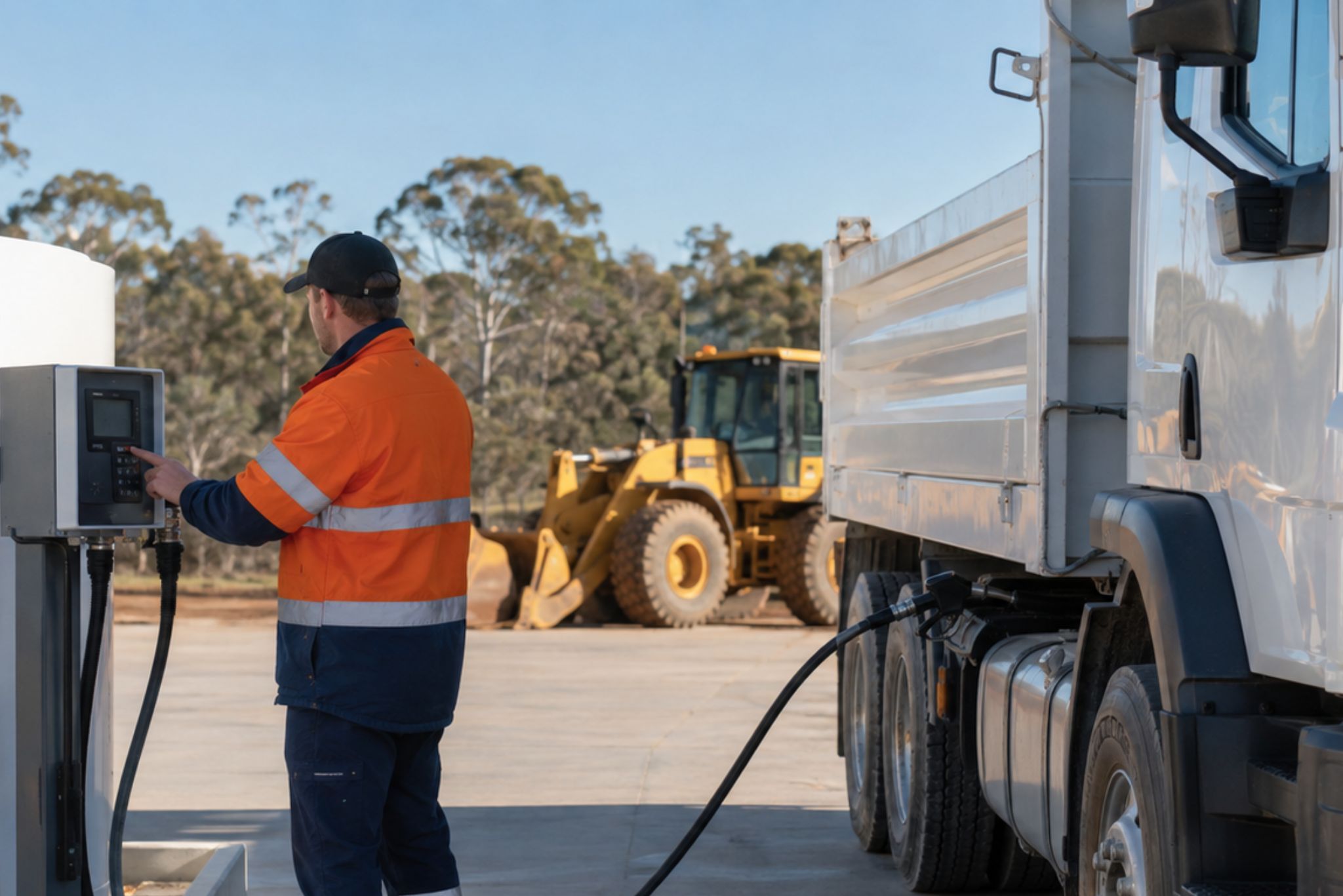
Before fuel can be dispensed, the user can be required to identify themselves and, depending on the selected configuration, enter details of the vehicle, machine or asset receiving the fuel.
The system can then record important transaction information, including:
- The identity of the user
- The vehicle or asset being refuelled
- The volume dispensed
- The date and time of the transaction
- Relevant odometer or operating information
- Fuel usage associated with individual assets
This creates a traceable record from the storage tank to the vehicle or machine.
Instead of relying on handwritten notes and estimates, the business gains structured fuel data that can be reviewed, compared and reported.
Control Who Can Access Your Fuel
An open or poorly controlled diesel tank creates an obvious risk. If anybody on the site can operate the pump, it is difficult to prevent unauthorised use or determine who completed a particular transaction.
Tecalemit fuel management technology can help restrict dispensing to approved users. This means access can be managed around the requirements of the operation, rather than leaving the pump freely available.
Controlled access can help reduce casual misuse and discourage theft. It also makes it easier to manage contractors, temporary operators and different teams working across the same site.
If a discrepancy appears, the business has a more reliable transaction history to investigate.
Track Fuel Against Individual Vehicles and Machinery
Recording total fuel consumption is useful, but it does not provide the complete picture. Businesses also need to understand which assets are using the fuel.
Allocating each transaction to a particular truck, excavator, loader, generator or other asset makes it possible to compare consumption over time.
If two similar vehicles perform comparable work but one consistently uses considerably more diesel, the difference may indicate:
- A developing mechanical problem
- Excessive idling
- Inefficient operation
- Incorrect asset information
- Unreported fuel transfers
- Potential misuse
Fuel data can therefore support more than stock control. It can also help identify maintenance issues and improve the way vehicles and machinery are operated.
For project-based businesses, accurate asset records can also help allocate fuel costs to the correct site, contract or area of the operation.
Improve Fuel Delivery Reconciliation
Accountability should begin when the diesel arrives onsite, not only when it is dispensed. Businesses need to compare the quantity stated on the delivery documentation with the movement recorded in the tank. If those figures do not align, the discrepancy should be identified before it becomes mixed into the wider fuel records.
Combining fuel management with accurate tank gauging provides a clearer view of stock entering, remaining in and leaving the storage system.
This can help businesses answer three fundamental questions:
- How much fuel was delivered?
- How much fuel remains in storage?
- Where was the dispensed fuel allocated?
When those figures can be reliably reconciled, unexplained losses become much easier to identify.
Avoid Unexpected Fuel Shortages
A lack of accurate tank information can create another expensive problem: running out of diesel. An unexpected fuel shortage can stop trucks, plant, generators and entire worksites. The cost of the lost productivity may be much greater than the cost of an urgent fuel delivery.
Fuel management and tank-level monitoring give businesses better visibility of their available stock. Managers can use consumption information to understand how quickly fuel is being used and plan replenishment more effectively.
This is particularly valuable for remote sites, high-consumption operations and businesses with changing workloads. It reduces reliance on manual dipping and helps avoid placing an order only after somebody notices the tank is nearly empty.
Can Tecalemit Be Added to an Existing Fuel Tank?
A business does not always need to replace its entire fuel storage installation to improve fuel control. Depending on the condition and configuration of the existing tank, Tecalemit pumps, dispensing equipment, tank gauging and fuel management technology may be integrated as part of an upgrade.
At Tanks On Site, we can assess the existing storage and dispensing system before recommending the most appropriate Tecalemit equipment. This ensures the proposed technology is suitable for the tank, fuel type, expected transaction volume and operational requirements.
For a new installation, the system can be designed as a complete package from the beginning. The tank, pump, dispenser, gauging and fuel management technology can all be specified to work together.
Choosing the Right Fuel Management Setup
Not every business requires the same level of fuel management.
A small depot with one tank and a limited number of users may need a straightforward method of controlling access and recording transactions. A large transport, mining or construction operation may require more detailed asset identification, remote monitoring and reporting across several dispensing points.
Before recommending a solution, it is important to consider:
- The number of tanks and dispensing points
- Monthly fuel consumption
- The number of drivers and operators
- The size and type of the fleet
- Fixed and mobile machinery
- Site connectivity
- Existing pumps and equipment
- Reporting and cost-allocation requirements
- Potential security risks
- Future expansion plans
Selecting individual components without considering the wider operation can create compatibility and reporting problems. A properly designed system should match how fuel is delivered, stored, dispensed and managed across the site.
Complete Tecalemit Solutions From Tanks On Site
At Tanks On Site, we supply and integrate Tecalemit fuel management technology for businesses throughout Australia.
Our Tecalemit range covers more than transaction recording alone. We can help bring together the equipment required to create a complete fuel storage and management solution, including:
- Fuel management systems
- Commercial fuel pumps
- Diesel dispensing equipment
- Tank gauging and monitoring
- AdBlue equipment
- Equipment for new and existing installations
This means businesses can work with one experienced team to develop a system around their operational requirements.
Whether you are upgrading an existing diesel tank or planning a completely new fuel installation, we can assess your site and recommend the appropriate combination of storage, pumping, dispensing, gauging and Tecalemit fuel management equipment.
Start Accounting for Every Litre
When diesel represents a major operating cost, knowing how much has been purchased is not enough. Your business should also be able to see who dispensed it, where it went and how it was used.
A Tecalemit fuel management system can create greater control, improve accountability and reduce the uncertainty surrounding onsite fuel consumption.
It may reveal unauthorised use, but it can also uncover record-keeping problems, inefficient assets, delivery discrepancies and poor stock planning. Most importantly, it provides the reliable data required to address the actual issue.
To discuss a Tecalemit fuel management system for your operation, call Tanks On Site on 1300 210 480 or contact our fuel management team.